Lassa fever: origins, reservoirs, transmission and guidelines
Lassa virus causes Lassa fever, an acute viral haemorrhagic fever (VHF).
Lassa virus is a member of the arenavirus family. The disease was first described in the 1950s, and the virus was identified in 1969 after 2 missionary nurses died from the disease in the Nigerian town of Lassa.
Lassa fever is a high consequence infectious disease (HCID).
Epidemiology
Lassa fever is endemic in parts of West Africa, particularly Guinea, Liberia, Nigeria and Sierra Leone, where the animal reservoir, the multimammate rat is prevalent.
There is some evidence of endemicity in the Central African Republic, Mali, Senegal and other West African countries sharing borders with the highly endemic countries. In 2011, sporadic cases were confirmed for the first time in Ghana. The last known outbreak in Ghana was reported in February 2023, in the Greater Accra Region.
A single case was reported in the Democratic Republic of the Congo in 2011.
Benin confirmed its first cases in 2014 and reported an outbreak in 2016. Sporadic cases continue to be reported.
Togo reported 2 cases in 2016, both in healthcare workers in northern Togo. Togo had not previously reported confirmed Lassa cases despite being located between known endemic areas. Further sporadic cases have since been reported.
Burkina Faso reported a case in early 2017.
Guinea
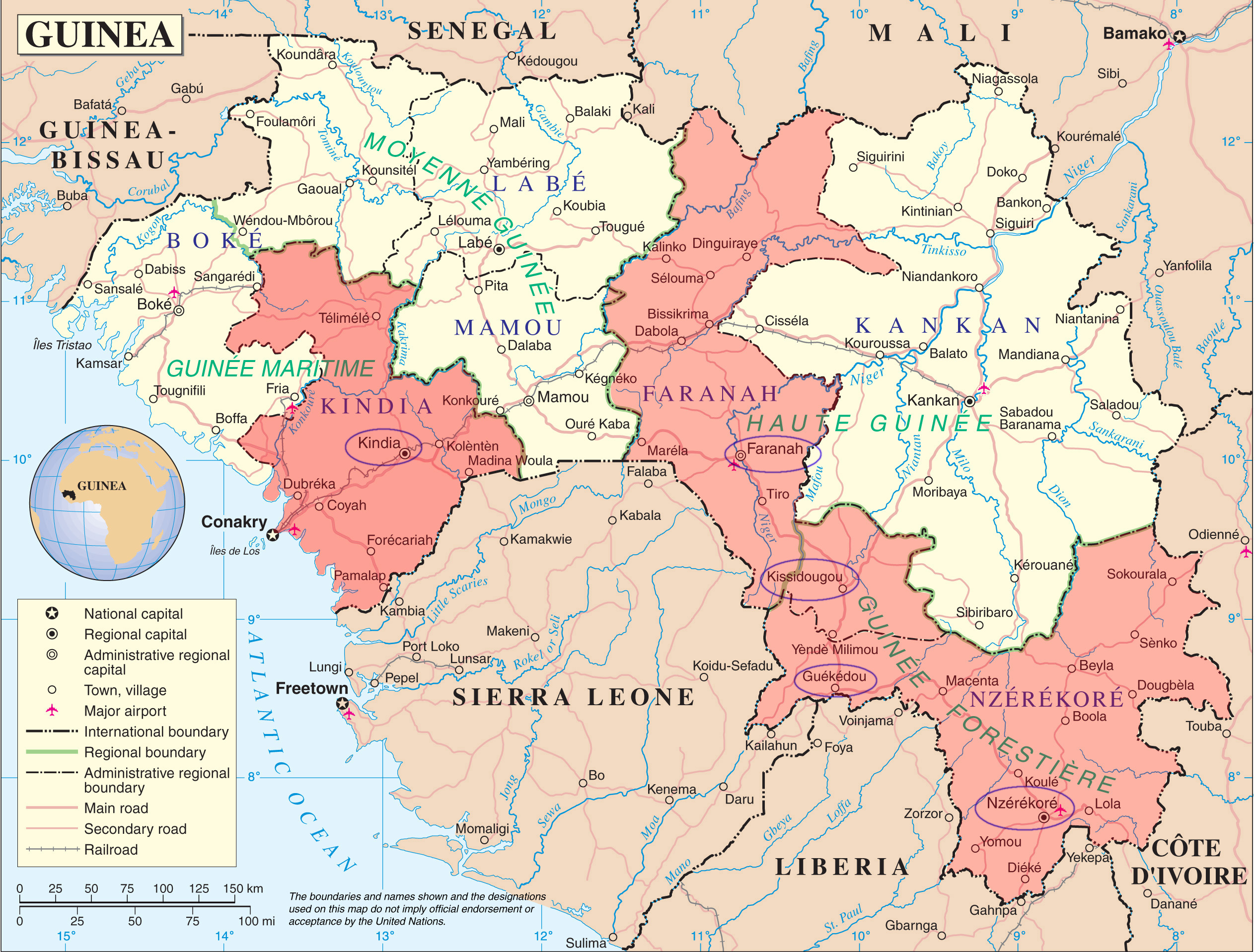
Lassa fever is endemic throughout Guinea; most clinical cases have been reported from Kindia, Faranah and N’zérékoré regions. The most recent outbreak of Lassa fever occurred between May and December 2021.
Liberia
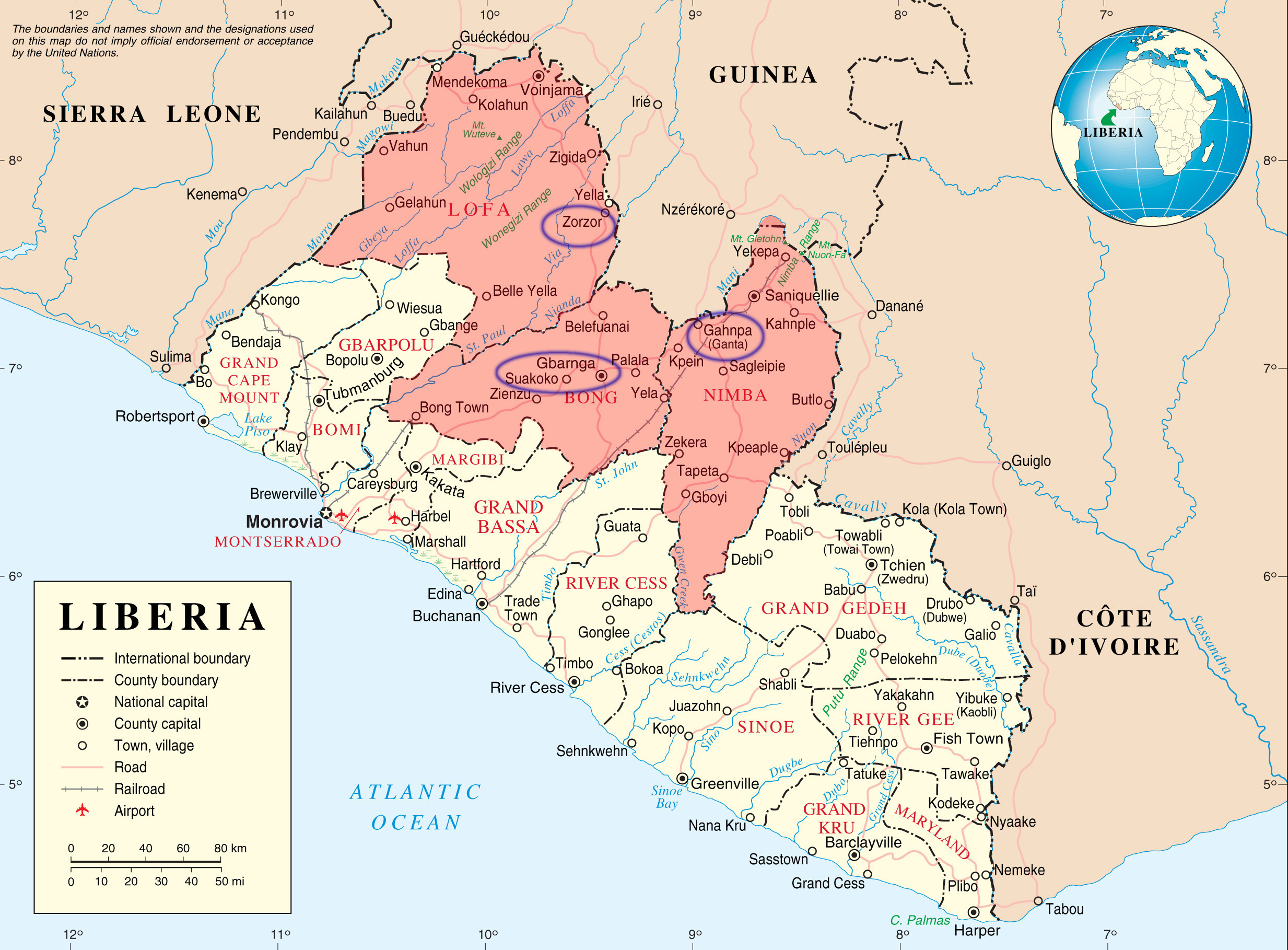
Lofa, Bong and Nimba counties are regarded as hyperendemic (areas of intense transmission). In 2014, an outbreak was reported at a UN Mission in Kakata, Margibi County.
Nigeria
Lassa fever is endemic in Nigeria with outbreaks almost every year in different parts of the country. Yearly peaks are observed between December and April.
The Nigeria Centre for Disease Control provides regular updates on its Lassa fever surveillance.
Sierra Leone
Historically, outbreaks were most frequently reported from Kenema and Kailahun districts.
A change in geographical spread is evident more recently, as shown on these maps.
Transmission
Lassa virus is present in wild multimammate rats (Mastomys species), which shed the virus in their urine and droppings. These are common in rural areas of tropical Africa and often live in or around homes. Once infected, rodents shed virus throughout their life.
Transmission of Lassa virus to humans normally occurs through contamination of broken skin or mucous membranes via direct or indirect contact with infected rodent excreta on floors, home surfaces, in food or water. Transmission is also possible where rodents are caught and consumed as food.
Person to person transmission occurs through infected bodily fluids, such as blood, saliva, urine, or semen. This can occur in healthcare or domestic settings.
Transmission to close contacts usually only occurs while the patient has symptoms. However, a patient can excrete virus in urine for between 3 and 9 weeks after the onset of illness and via semen for up to 3 months.
Symptoms
Infection is mild or asymptomatic in 80% of cases, but can cause severe illness and is fatal in around 1% to 3% of patients. The incubation period for disease is usually between 7 and 10 days, with a maximum of 21 days.
The onset of illness is insidious, with:
- fever and shivering
- malaise
- headache
- generalised aching
- sore throat
Nausea, vomiting, diarrhoea, or cough can accompany these symptoms.
An important diagnostic feature is the appearance of patches of white or yellowish exudate and occasionally small vesicles or shallow ulcers on the tonsils and pharynx.
As the illness progresses, the body temperature can rise to 41ºC with daily fluctuations of 2ºC to 3ºC.
Extreme lethargy and exhaustion that is disproportionate to the level of fever can occur in severe attacks. During the second week of illness symptoms include:
- oedema of the head and neck
- encephalopathy
- pleural effusion
- ascites
Renal and circulatory failure may occur, aggravated by vomiting and diarrhoea.
In the severest cases, bleeding into the skin, mucosae and deeper tissues occurs, usually leading to death.
In non-fatal cases, the fever subsides and the patient’s condition improves rapidly although tiredness can persist for several weeks. Late complications include sensorineural deafness in around 25% of patients, persisting for life in around a third of those affected.
Infection is fatal in around 15% of hospitalised patients.
Lassa fever is particularly severe in pregnant women in the third trimester; the fetus dies in about 95% of cases.
Symptoms in children are similar to those in adults, but infant infection can result in ‘swollen baby syndrome’ with oedema, abdominal distension, bleeding and often death.
Diagnosis
Clinical diagnosis of Lassa fever is difficult. It can be confused with other infections such as severe malaria, typhoid fever and other viral haemorrhagic fevers.
In the UK, the UK Health Security Agency (UKHSA) has specialised laboratory facilities to provide a definitive diagnosis at the Rare and Imported Pathogens Laboratory, UKHSA Porton.
RT-PCR for nucleic acid detection, virus isolation or antibody detection methods are used to diagnose Lassa fever.
See VHF sample testing advice.
Treatment
Treatment with the antiviral drug ribavirin is most effective when started early in the course of clinical illness.
Supportive care such as fluid replacement, blood transfusion or other appropriate measures is also essential.
Guidelines
The UK has specialist guidance on the management (including infection control) of patients with viral haemorrhagic fevers (VHFs), including Lassa.
It provides advice on how to comprehensively assess, rapidly diagnose and safely manage patients suspected of being infected, within the NHS, to ensure the protection of public health.
Prevention and control
There is no licensed vaccine for Lassa fever. In endemic areas, rodent control and avoiding contact with rodents and their excreta helps prevent infection. Infection control includes storing food in rat-proof containers.
Avoiding contact with bodily fluids of an infected patient prevents person to person spread. In healthcare settings, these infection control measures include:
- special barrier nursing procedures
- VHF isolation precautions to isolate infected patients
- wearing protective clothing for contact with the patient
Once the patient has recovered, they are only infectious via semen and urine. Patients must avoid sexual intercourse for 3 months.
People living in endemic areas of West Africa with high populations of rodents are most at risk of Lassa fever. Imported cases rarely occur elsewhere in the world. Such cases are almost exclusively in persons who work in endemic areas in high-risk occupations such as medical or other aid workers.
The risk to tourists is considered to be very low.
Cases in the UK
Imported Lassa fever cases are extremely rare in the UK. Since 1980, 11 confirmed cases of Lassa fever have been imported with the last known incident reported in February 2022 when 3 confirmed cases in the UK were linked to recent travel to West Africa.
Last updated 1 November 2023 + show all updates
-
Updated information on epidemiology and cases in the UK.
-
Updated information.
-
Updated Epidemiology section, specifically Nigeria.
-
Updated epidemiology section and added link to High Consequence Infectious Diseases (HCID).
-
Updated with current epidemiology.
-
Updated with current epidemiology.
-
Updated with 2017 data.
-
Updated with recent outbreaks in Benin and Togo.
-
Benin and Togo added to affected countries.
-
First published.